Saturn, Rahu, Ketu, (Vedic Astrology Part IV)
This post is inspired and predominantly contains excerpts from the book – The Astrology of the Seers – A comprehensive guide to Vedic Astrology from David Frawley. I fully recommend the book.
‘Everything that happens at a particular moment shares the quality of the moment. Hence, in the moment of our birth can be read the quality of our life, just as the nature of a tree can be read in the seed from which it comes.
As the lords of time, the planets are the lords of karma or destiny.
The stars form the cosmic man and we as human beings form a solar system within ourselves.
Our own soul is a star, a sun, a point of cosmic light.
The universe becomes a tapestry of thought in which we can play rather than a net of desires in which we are caught.’
Saturn, Rahu, Ketu, (Vedic Astrology Part IV)
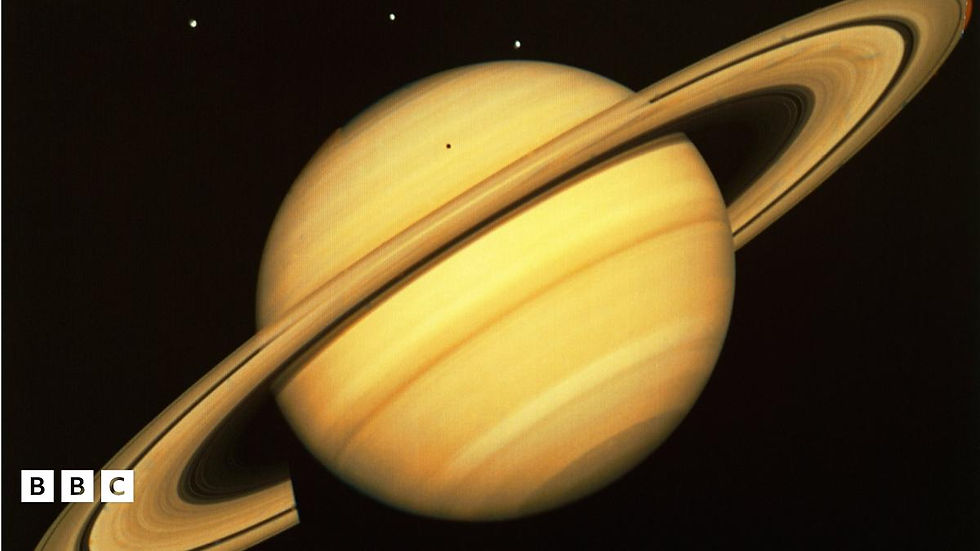
Saturn - traditionally the most difficult of the major planets, the legendary king of the malefics. He has been feared throughout the centuries as the great God of Death — the significator of death, disease, poverty, separation, ugliness and perversity.
Though Saturn possesses a higher and more beneficent side, at least from the standpoint of the spiritual life, even this is stem and exacting, hard to live up to and to endure — a power of discipline, asceticism and solitude. The religions of world negation, like Hinduism and Buddhism, have the influence of a strong spiritual Saturn. The Four Noble Truths of the Buddha and his doctrines of impermanence and universal suffering reflect the wisdom of Saturn.
Saturn brings limitation and obstruction, hindrance in self-expression and in self-manifestation, which may become oppression and adversity. As Jupiter indicates the process of creation and expansion, Saturn brings about contraction and destruction. As Jupiter is the great affirmer, Saturn is the great negator. As Jupiter is the God of joy, he is the God of sorrow. As Jupiter is the optimist, he is the pessimist. As Jupiter shows the joy inherent in all life, Saturn reveals all life as misery. Jupiter is the positive teacher of the soul; Saturn, the negative guide. As Jupiter tells us that “all is God,” Saturn drills into us that “nothing is Divine,” that there is nothing truly real in the outer world.
Saturn is the significator of disease, old age and death — the great enemies of human life which overcome all life bound by time. As the most distant in orbit of the major planets, his is the major influence we all must face in the end. Hence, in the placement of Saturn in the chart is the ultimate issue of our life and destiny, the hard facts or stem reality we must face.
Though the power of Saturn to limit or destroy what it influences should not be underestimated, its positive value must be considered as well. Destruction is the necessary counterpart for creation, as decay and death are required for new life and growth. The limitation on our material fate is necessary: all material things must come to an end; what is put together must come apart; and all things must return to their component elements.
Our great fear of Saturn has measured the degree of our attachment to the material world and our inability to face the ultimate issues of our existence. Saturn shows us the limitation of this realm, which is the necessary but painful lesson we must learn to find our way into the unlimited. Saturn is death that takes us beyond the limitations of mortal life, which is the gateway to the eternal, though straight and narrow as the Tor’s edge.
Saturn gives bad luck, misfortune, and oppression. It is the planet of bad karma or unfortunate destiny. Yet these may come upon a soul not because it was evil or slow to evolve in past lives. Some souls, particularly those who are more advanced, may seek such things as a means of quicker and deeper spiritual growth in life. Anyone can resort to the Divine in prosperity, but who can do so in great adversity? Such is the measure of a great soul. Saturn is also the suffering that makes us grow inwardly.
The influence of Saturn is to delay, to withhold. As the slowest moving of the planets, he retards things, holds back their development. Those retarded in mind or speech are usually under a strong affliction of Saturn. He makes us deaf and blind, stunted or deformed. Saturn is the significator of old age, the God of time, who brings on all the degenerative processes of aging, the failure of our faculties and our powers. As such, a badly placed Saturn causes premature aging. Saturn takes away our vitality on a physical or on a mental level. He causes depression, melancholy, and self-pity, and gives rise to worry, fear and anxiety.
As a nervous planet, Saturn obstructs nerve functioning. He may cause numbness, paralysis or degenerative neurological disorders. His obstructing and repressing influence on the mind may promote neurosis or insanity. Saturn is behind most diseases, particularly chronic and degenerative diseases, and diseases of old age, including arthritis and cancer. As representing decay he can cause an accumulation of waste materials in the body and often is a point of devitalization in the chart.
Saturn causes poverty, deprivation and want. He keeps us in bondage or servitude, under the domination of others, and under the rule of external forces. Yet Saturn also causes us to retain what we possess. Saturn indicates property, land and Fixed assets. Those who obtain wealth through a well-disposed Saturn may become misers and will carefully hold on to what has with such difficulty been acquired.
In the lower sense, Saturn is a selfish planet; in fact, we could say that Saturn is the planet of selfishness. It indicates our most deep-seated and obstinate ego drives towards self-protection. Saturn is our survival instinct, which becomes our need to maintain our separate existence, and is more basic and stronger even than our sexual drive. Most of our materialistic values, like our need for wealth, are little more than glorified survival values and bear the limitation and poverty of vision of Saturn. They are caused by the influence of Saturn but, as circumscribed by it, are also destroyed by its disintegrating affect.
Furthermore, as the planet of the ego, Saturn is also the planet of fear, upon which the ego is based. Saturn creates fear and darkness in the mind. He makes us feel that we cannot overcome things, that life is against us. He makes us doubt ourselves, doubt even the Divine, and makes us prey to dark fears, fantasies and phobias.
Saturn represents the darker side of the mind and the baser elements of life: crime, perversity and paranoia. Saturn indicates the underworld, the lower astral realms. Its influence works through ugliness, terror and fright, abuse, degradation and self-debasement. Saturn can cause not only separation from loved ones and loss of love but also sexual perversions and unnatural sexual actions. Saturn can cause us to pursue gross pleasure without any grace, or find pleasure in acts of violence, harming others, or even harming oneself.
Usually, a strongly malefic Saturn is prominent in the charts of criminals, perverts, or evil-minded people. It’s negative side comes out particularly in association with Mars, another cruel planet. There is no limit to the destruction the evil forces that these planets can project when not under benefic influence. On a lower level, Saturn represents the gross body and the senses, the elemental forces which dominate us. It is the gravity that pulls us down and gets us attached to what is inferior.
Saturn is the God who eats his own children, who devours his own progeny. He raises people up, but eventually casts them down in a very precipitous fall. Those who are under the spell of his base values will eventually be destroyed by them. He shows the falsehood for what it is, in which there is the revelation of the enduring value of truth.
As the power of darkness and obstruction, Saturn is the enemy of the Sun and the Moon and has an eclipse-like effect upon them. Only Jupiter has the power to really subdue or to balance out his influence, though Venus and Mercury can refine it to a great degree. As Saturn is limiting, Jupiter is un-limiting. As Saturn is miserly, Jupiter is generous. Both together allow for an equalized movement of expansion and contraction, creation and destruction, in which there can be true growth. As Jupiter elevates Saturn, Saturn gives Jupiter a greater detachment and more objective perception.
Saturn is in many respects not only the lowest of the planets but also the highest. Its lesson is the most difficult but the most rewarding. Saturn is the grandfather spirit and law giver, our guiding ancestor. He represents not only the negative influence of the past which constricts us, he represents the positive spirit of the past that brings order and consistency to our lives.
Saturn in Hindu mythology is the son of the Sun. The Sun moves in a chariot directed by Saturn. Saturn is the darkness, death and sorrow we must overcome for the revelation of the true light. He is the guardian of the mysteries of true awareness — which can only be attained through a very precise and exacting cultivation of attention.
Saturn is the yogi in meditation. He can give complete detachment and independence. He is the one who stands alone and goes beyond the limitations of the masses. He shows the way of transcendence, though necessarily difficult, whereby all limitations can be overcome by resorting to our true and unlimited Self. In this respect the power of Shiva, who the lord of the yogis and the God of death and transcendence, may work through Saturn.
A well-placed and strong Saturn is thus necessary for the spiritual life. In fact, it is necessary for creating anything of enduring value in any domain of life. Saturn gives the concentration, the sense of detail, the discipline and seriousness necessary to deal with the great challenges of life.
Saturn is the significator of life itself. It indicates fate, term of life, and longevity. A strong Saturn protects the life. Saturn is the planet to be propitiated in old age. He indicates the regime necessary for full life and longevity, violating which, we suffer from premature decay and death.
Rahu and Ketu – what are the lunar nodes?
The lunar nodes are considered to be shadowy planets. Astronomically, they represent the points at which the Moon’s orbit crosses the ecliptic, the celestial equator. These are the places at which the Moon crosses the point of the Sun’s orbit, at which eclipses can occur. The lunar nodes show the times when the solar and lunar forces obstruct each other or cancel each other out. They show the potential for short-circuiting, as it were, oiir solar or lunar energies. They are thus very sensitive points that can cause repercussions in the total field of planetary forces.
Rahu, the north or ascending node, is the point at which the Moon crosses the ecliptic to the north; Ketu, the south or descending node, is where it crosses it to the south. The influence of the north node is thus ascending, expanding and externalizing, but of what is largely a negative force. The south node is descending, contracting and internalizing. Hence, in the Vedic system the south node is less negative than the north.
Eclipses of the Sun and Moon can occur in proximity to either of the nodes. The nodes were regarded mythologically as the demon which swallows the luminary and causes the eclipse. As such, they have the power to overcome the Sun and the Moon, and in this sense they can be stronger than any of the planets.
In Vedic astrology, therefore, the conjunction of any planet with either of the lunar nodes is regarded as a kind of eclipse of that planet wherein its energy is in some way obstructed, negated or liberated.
While it is the practice of many modem astrologers today to overlook or consider lightly the lunar nodes, Vedic astrology regards them as among the most important factors in chart interpretation. They possess the power not only to negate planetary influences, but because eclipses are points of energy transformation, they have additional special properties to transfer or to augment planetary influences for good or ill.
The lunar nodes in Vedic astrology are a much more complex and studied phenomenon than in Western astrology. Their meaning is usually quite different though, under certain conditions, it can be similar to that in the Western system.
The lunar nodes, by themselves, are regarded as generally the most malefic forces in the chart. The north node, Rahu, is said to be like Saturn, the greater malefic; the south node, Ketu, like Mars, the lesser malefic. Yet, the nodes have a subtler, more psychic, and more difficult to neutralize malefic force than these two main malefics. Of the two, the north node, Rahu, is regarded as more malefic — as usually the most malefic force in the chart.
That the two nodes are malefic is quite logical, for they indicate the factors which cause eclipses that block out the light of the great luminaries, the Sun and the Moon. For this reason they are more indicators of bad karma than good. They may show when collective karma shadows the individual life, and in this regard they can represent collective catastrophes. Moreover, the south node, as completing the karmic cycle, is more generally fortunate than the north node that begins it because its energy is being internalized and withdrawn.
In short, the north node, Rahu, is the shadow of the Moon, or the negative Moon. It has the power to obstruct, negate, cover or darken the Moon (the mind). As the negative Moon, or the negative side of the Moon (the mind), Rahu represents illusion, hallucination, trance, psychosis, paranoia, and other such negative mental states.
The south node, Ketu, is the shadow of the Sun, or the negative Sun. It has the power to obstruct, negate, cover or darken the Sun (the self). As the negative Sun, or the negative side of the Sun (the self), Ketu represents self-doubt, lack of self-confidence, and lack of self-worth, which can lead sometimes to self-aggrandizement or, ultimately, megalomania.
On the positive side,' the influence of Rahu can put us in harmony with collective trends and give popularity, prestige, fame and power. It imparts an a psychic sensitivity to mass trends and gives us a capacity to use them. A strong Rahu gives worldly powers and success — the fulfillment of worldly desires, — but usually not inner fulfillment.
Ketu, in the positive sense, can create great powers of concentration, powerful perception, independence, the capacity to transcend external influences, psychic and spiritual insight. In terms of Yoga and the spiritual life, it ultimately becomes the significator of liberation itself (Moksha karaka). Aligned with Mercury, it gives good insight and is helpful in the pursuit of such subtle subjects as astrology. Ketu means a flag. It has the power to boost up the effects of strong planets with which it is conjoined. A planet in its own sign or exalted, conjoined with Ketu gains considerable power. Venus in the Second house in Libra, conjoined with Ketu, for example, will give wealth. With Mars in Scorpio in the Third house, Ketu can give great military prowess. Rahu can also function in this way, but to a lesser degree.
In the spiritual realm, Rahu can give psychic powers and mediumship capacity, but also danger from drugs, danger of possession, and danger from black magic. Ketu gives perception, liberation, wisdom, and psychic sensitivity in a more genuine way, but can give a too limiting, critical view of things that gets us stuck in some comer of our minds. Yet, as the two nodes are always opposite each other, usually when one is strong or weak, so is the other.
The positive influence of the nodes, however, is less common than the negative, and both tend to have a debasing effect upon us. Both nodes represent very difficult forces to handle, and their positive side may only come out through overcoming great obstacles in life and may have side-effects.
Rahu, the north node, which Western astrologers equate with Jupiter, Vedic astrology perceives quite oppositely as a more malefic form of Saturn. However, Vedic astrology does recognize that the lunar nodes (either of them, but more commonly the north node) can function in a positive, Jupiterian manner when associated with a strong planet or when in a strong position.
As shadowy planets, the nodes take on and magnify the power of the planets with which they are combined. The north node in the Tenth house, for example, can boost up our career, but it may threaten our integrity in the process.
Rahu is regarded as the main planetary factor behind insanity, neurosis, neurological disorders, possession by negative entities, and other such abnormal sensitivities of the mind and nervous system. This is particularly true when it influences the Moon (especially by conjunction) and other factors representing the mind (like Mercury and the Fourth house). It can heighten our astral sensitivity, which can be to weaken our soul’s grip on the physical body.
The influence of Rahu on many charts and have seen a high instance of Moon-Rahu combinations in insanity, nervous disorders, or criminal action. There are Moon-Rahu conjunctions in charts of such mentally disturbed and power-seeking types as Jim Jones and Charles Manson.
Rahu’s manifestation is not always as severe and may be counteracted by other forces, as anything in astrology can be. Yet, its basic effect is usually as predicted in traditional Vedic astrology and seldom really Jupiterian.
The key to most nervous, psychological and emotional disturbances; susceptibility to drugs and psychic influences; mysterious diseases like cancer or neuro-muscular disorders; as well as most inexplicable general mental unhappiness, malaise and unrest in life, can usually be traced to the influence of these nodes, especially Rahu. This is particularly true when they combine with and augment the negative force of other malefics like Saturn.
Ketu, the south node, which Western astrologers treat like Saturn, is treated in the Vedic system like Mars. Though malefic, it is not regarded quite as malefic as it is in the Western system. Ketu creates doubt, disturbance, anger, ambition, willfulness, and a critical and often narrow vision in life which may lead to conflict and argument.
While Rahu shows an individual carried away by mass trends, collective, unconscious, or astral influences, Ketu shows the individual caught in his own contracted energies, negative, critical, doubting, isolated, alienated, and obstinately separate.
Pluto, Uranus and Neptune
Though not usually used in Vedic astrology, down to the fact the influences they represent are determined almost always in Vedic astrology according to the lunar nodes.
Seen darkly these planets are quite alarming. In short,Neptune relates to the negative or secretive side of Jupiter, and is a strongly sensitizing and often psychically influential planet. It has subtle Venus like effect as it is the planet of imagination, illusion, fantasy and charm. Meanwhile, the influence of Uranus is eccentric, erratic, disturbing and a strongly individualizing force. It can force us into spiritual changes but may just derange us if we are not conscious of its power. It is known for Shock, disturbance, transformation, eccentricity and invention. Finally, Pluto represents the negative side of Mars and is a psychic, willful planet. It is known for Will, domination, manipulation, catastrophes, even leading us into danger or suffering, even death.


Comments